

If you’ve been told you need a tooth pulled, your stomach probably dropped. Maybe you expected a filling, but instead you’re sitting there trying to process the word “extraction.” Most patients don’t realize that deciding whether to save a tooth or remove it is one of dentistry’s most consequential choices. It’s not always as clear-cut as it sounds.
At Coastal General Dentistry, we’re in an unusual position. Our practice has an oral surgeon and an endodontist as equal partners, along with three general dentists in Virginia Beach. That means when a patient comes in with a troubled tooth, no one person decides whether to save it or remove it. A team reviews the case from different angles.
Dr. Brad Trotter is our oral and maxillofacial surgeon. He completed his residency at Naval Medical Center Portsmouth and served as the Oral Surgeon at Naval Hospital in Naples, Italy. Dr. Craig Luskey is our endodontist. He earned the American Association of Endodontists Award as the top endodontics student at VCU and completed his specialty training at Fort Bragg. Together, they’ve seen just about everything.
Here’s how the decision actually gets made.
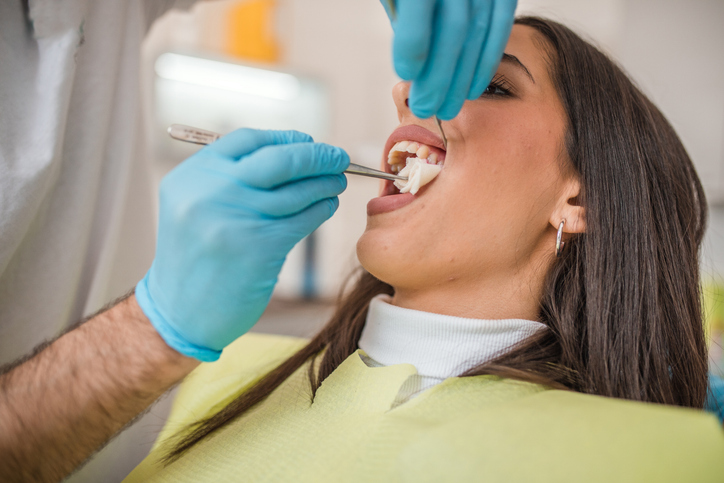
When a Tooth Can Be Saved
A tooth can be saved if the underlying structure is intact and the infection or damage is contained. That usually means a root canal, sometimes followed by a crown, and sometimes preceded by other treatments.
Dr. Luskey’s entire practice focuses on this. He focuses on endodontics, which means he spends every day saving teeth other dentists might have given up on. Dr. Luskey trained at Fort Bragg in one of the nation’s top endodontic programs. He also served as Chief Resident during his advanced general dentistry residency at Fort Jackson. He’s not a general dentist who does the occasional root canal. He’s a specialist who does this every single day.
Here’s when a root canal is likely the right answer:
- The infection is contained to the pulp. The pulp is the soft tissue inside the tooth that contains nerves and blood vessels. When bacteria reach it, they can infect the tooth. A root canal removes the infected pulp, cleans and seals the inside of the tooth, and keeps it in place.
- The tooth structure is still strong. If enough healthy structure remains, it can support a restoration after the root canal. A crown usually goes on top to protect it.
- The bone around the tooth is healthy. If the bone that supports the tooth is intact, the tooth has a good chance of lasting. If the bone is compromised, saving the tooth becomes more difficult.
- Teeth are important for your bite. Front teeth and first molars are especially important for function and appearance. When possible, saving them is usually the best long-term choice.
When an Extraction Is the Better Choice
Sometimes removal really is the best path. That’s where Dr. Trotter’s expertise comes in. He served 13 years of active duty in the Navy, including as an Oral Surgeon at Naval Hospital Naples, Italy, and later as an attending staff member in the Portsmouth residency program. He’s performed thousands of extractions in Virginia Beach throughout his military and civilian career.
Here’s when extraction is the right answer:
- The tooth is too damaged to restore. If a crack extends below the gumline or decay has destroyed the tooth structure, a root canal won’t hold. Extraction is often the only option.
- The infection has spread beyond the tooth. If the infection has reached the bone or surrounding tissue, saving the tooth may not be possible. In some cases, an extraction is necessary to stop the spread and protect your overall health.
- The tooth is causing problems for the rest of your mouth. Impacted wisdom teeth, overcrowding, and teeth that are damaging their neighbors are all situations where removal is the healthier choice.
- A root canal has already failed. Sometimes a previously saved tooth develops a new infection or fractures in a way that can’t be repaired. In those cases, extraction and replacement may be the better path forward.
- The patient’s overall health makes surgery safer than preservation. For some patients, especially those with certain medical conditions, extraction may be the safer choice.
Why Having Both Specialists Matters
Most dental offices have one dentist making this decision. That dentist may have training in root canals and extractions, but they aren’t a specialist in either. They make the best call they can with their training.
At Coastal General Dentistry, we make decisions collaboratively. Dr. Luskey evaluates the tooth’s endodontic potential. Dr. Trotter evaluates the surgical and structural considerations. Dr. Cappy Sinclair, Dr. Mark Reichley, and Dr. Clayton Willinger bring their own expertise in general, cosmetic, and restorative dentistry to the conversation. Together, they build a recommendation that considers every angle.
That’s rare, and it matters. The decision about whether to save a tooth isn’t always black and white. Sometimes multiple paths forward exist, and each has trade-offs. Having specialists on both sides of the conversation means patients get a more complete picture.
Dr. Sinclair is an AACD Accredited Member and Dawson Academy trained. He leads a study club educating other dentists on functional and cosmetic principles. Dr. Reichley is Ivy League trained at Penn and a Fellow of the International Congress of Oral Implantology. Dr. Willinger trained at the Kois Center. Each brings a different perspective to the conversation.
What the Consultation Looks Like
If you come to our Virginia Beach office with a troubled tooth, here’s what happens:
- A Comprehensive Exam: We examine the tooth, surrounding teeth, gums, and bone. We take digital X-rays and, if needed, 3D imaging.
- A Conversation About Your Options: Dr. Luskey and Dr. Trotter, along with your general dentist, will walk you through the options. If we can save the tooth, we’ll explain what that involves. If extraction is the better path, we’ll explain why.
- A Plan that Fits Your Situation: Whether you save the tooth or replace it, we’ll build a plan that fits your health, budget, and goals. If you need an implant after an extraction, Dr. Reichley’s ICOI Fellowship training comes into play. If you need a crown after a root canal, your general dentist handles it.
- An Honest Recommendation: We won’t push you toward one option or the other. We’ll tell you what we’d recommend for our own family and explain why.
Serving Virginia Beach and Hampton Roads
Coastal General Dentistry is at 919 First Colonial Rd. Suite B in Virginia Beach, VA. We serve patients from Great Neck, Kings Grant, Lynnhaven, Cape Story by the Sea, Croatan Beach, Shadowlawn, Thalia, Ocean Park, Chick’s Beach, and across Hampton Roads.
If you’ve been told you need an extraction in Virginia Beach, or you’re wondering whether we can save your tooth, we’d love to talk. Our team of five dental professionals will look at your situation from every angle and give you an honest recommendation.
Call our new patient line at 757-216-9914 or request an appointment online. We look forward to meeting you.